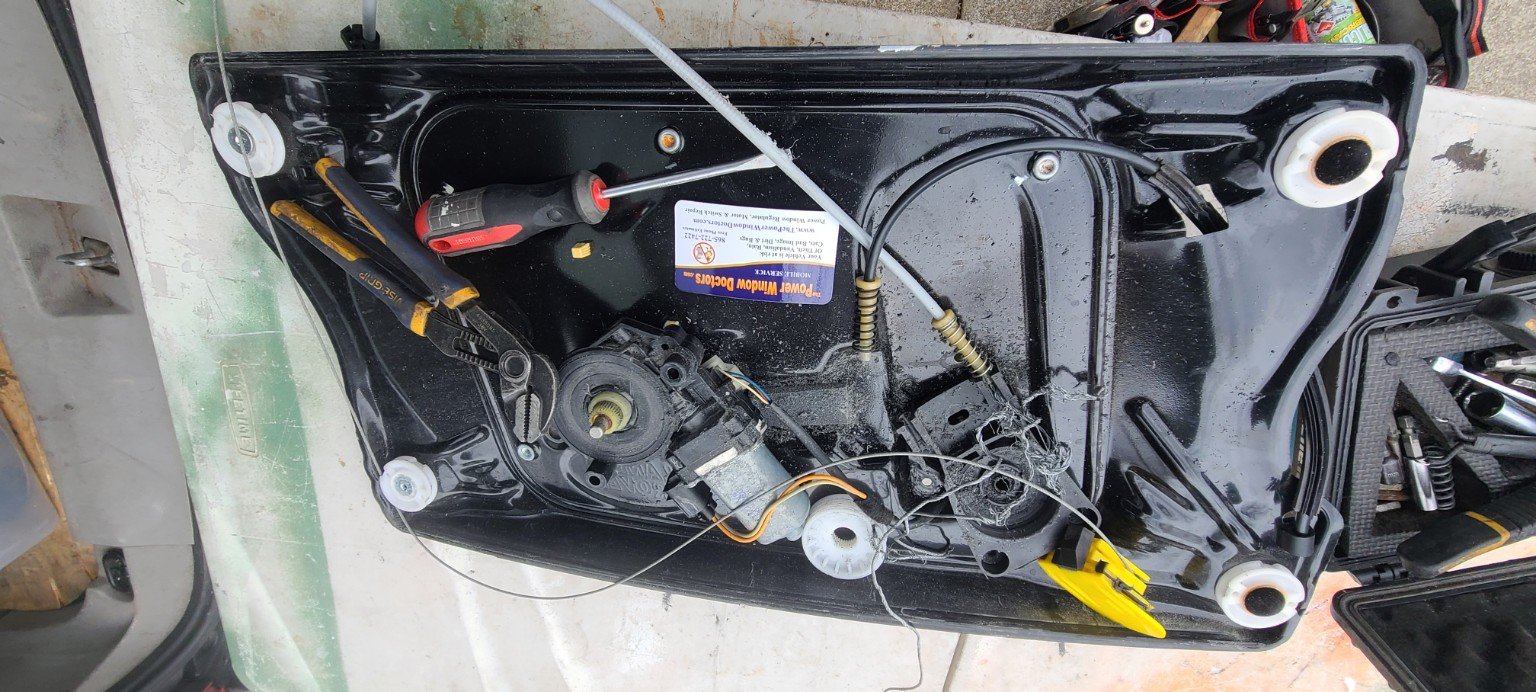
Step 1: Turn the ignition on
Park safely, set the parking brake, and turn the ignition to the position that operates the power windows. Some vehicles require the engine running or the accessory setting.
Step 2: Check the window lock
Make sure the window lock on the driver's master switch isn't preventing operation. Try another window to see whether the problem affects just one door.
Step 3: Test both switches
If the affected door has its own switch, try that switch and the driver's master switch. If only one works, a switch or electrical fault may be involved.
Step 4: Listen to the window mechanism
With the door closed and your hands away from the glass, briefly press UP and listen. Motor noise without glass movement can suggest regulator or cable trouble. Clicking or silence may involve a motor, switch, wiring, or other electrical component. These are clues—not a diagnosis.
Step 5: Gently assist the glass upward while alternating the switch
If a cable-style regulator has bound up, you may hear a grinding sound from the motor when you operate the switch. This can happen when the regulator cables are tangled or binding inside the housing; the sound alone does not confirm the cause.
One technique sometimes used is to gently pull upward on the glass while briefly alternating the window switch between UP and DOWN. The short changes in direction may relieve cable tension and allow the glass to rise. Never jerk, twist, or force the glass.
Safety first: This technique carries a real risk of pinched fingers, broken glass, or sudden glass movement. Keep hands away from the upper closing edge, door frame, and mechanism. Do not attempt it if the glass is tilted, loose, cracked, or detached, or if you cannot maintain a safe grip. Stop if resistance increases or the glass does not move smoothly. A technician can assess it without risking additional damage.
Step 6: Check whether the glass is detached
If the glass is tilted, loose, or has dropped into the door, the regulator or window sash may be broken or detached. Stop pressing the switch and avoid forcing the glass.
On vehicles with a factory-bonded sash, the sash uses a specialized attachment process. A field-applied adhesive may not provide a durable repair. Depending on the vehicle and the damaged attachment, replacing the glass-and-sash assembly may be necessary even when the glass itself is not cracked. We'll confirm the correct repair before recommending replacement.
Step 7: Temporarily support glass that has been raised
If the window is already fully closed but will not stay up, some temporary supports can help protect the vehicle until it is repaired:
- A soft door-stop wedge or suitable door shims, positioned only where they won't damage the glass or weatherstripping
- A glass-rated suction cup used as a temporary holding aid if it can be safely positioned
- Green FrogTape as a temporary external aid, where appropriate, applied only to clean compatible surfaces after checking the manufacturer's guidance
Green FrogTape may be easier to remove cleanly than duct tape; blue painter's tape is generally less suitable when exposed to moisture. No adhesive tape guarantees a waterproof seal or securely holds a loose window. Avoid leaving a vehicle unattended with unsupported glass.
DON'T USE DUCT TAPE
Duct tape can leave stubborn residue on paint, glass, and trim. It isn't a reliable repair or secure window support. Use a suitable temporary covering and arrange for repair.
Step 8: Cover the opening if the window won't go up
For short-term weather protection, stretch clear plastic food wrap (such as Saran Wrap) smoothly across the window opening, or ask an auto-parts or auto-body supplier for collision wrap. Smooth, transparent film may allow some visibility, but wrinkles, glare, or moisture can still obstruct your view.
Never drive if the covering blocks your sight lines, mirrors, or safe operation of the vehicle. Secure the covering according to its instructions without damaging the paint or door seals. This is only a temporary weather barrier, not a replacement for automotive glass.
Step 9: Call The Power Window Doctors
If these basic checks don't restore the window, call The Power Window Doctors. We diagnose window regulators, motors, switches, detached glass, and broken sashes for cars, trucks, and SUVs. Find your service area or request your free estimate below.