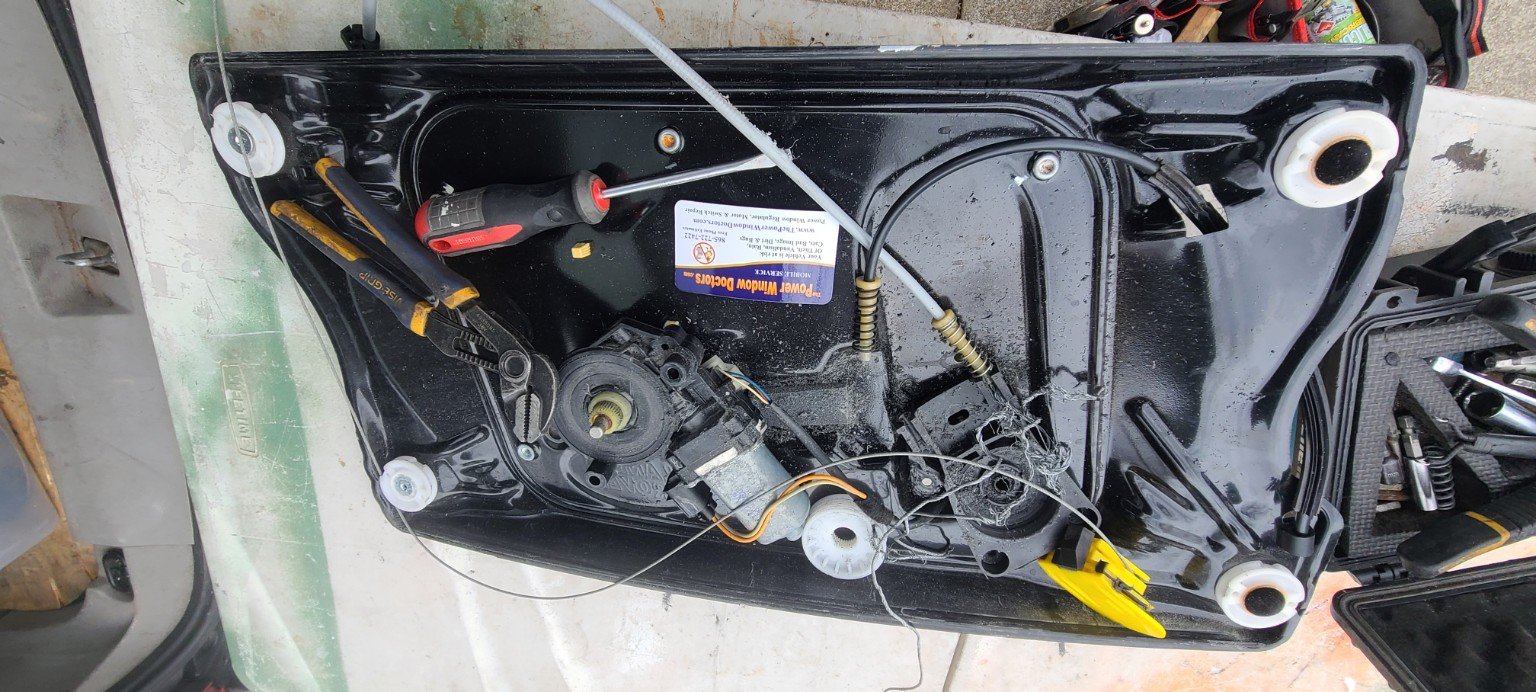
What makes a power window work?
A power window works through several connected parts. The driver or passenger operates a switch; electrical power reaches a motor, and a regulator guides the glass up or down. Guides, channels, wiring, and in some vehicles a control module also play a role.
The window regulator
The regulator supports and moves the glass. Some designs use cables and pulleys; others use scissor arms or other lifting mechanisms. A failing regulator can let the glass tilt, stick, or drop into the door.
Explore window regulator repairs →
The power window motor
The motor supplies movement to the regulator. A motor may fail intermittently, run slowly, or stop entirely. The switch, wiring, and regulator should also be checked before concluding the motor needs replacement.
Learn about window motor repair →
Switches and electrical controls
Switches send the request to raise or lower the glass. A non-working switch, wiring fault, fuse, or control-module issue can cause similar symptoms. Diagnosis helps avoid replacing working parts.
How to recognize the problem
A grinding noise with stationary glass may indicate a mechanical problem. Silence may indicate a switch or electrical fault, but it is not conclusive. Tell us which window failed and what you heard or noticed immediately before it stopped working.
What to do next
If your window has fallen into the door or become stuck down, avoid repeated operation that could cause additional damage. Our mobile repair service can assess the regulator, motor, switch, and glass guides.
Read what to do when a window is stuck down →
Get a free phone estimate
Tell us your year, make, model, ZIP code, and which window needs attention. We will review your repair request and confirm service availability.
GET A FREE TEXT ESTIMATE📍 FIND YOUR SERVICE AREA